
What Is the Difference Between Proprietary Trading and Modern Prop Trading?
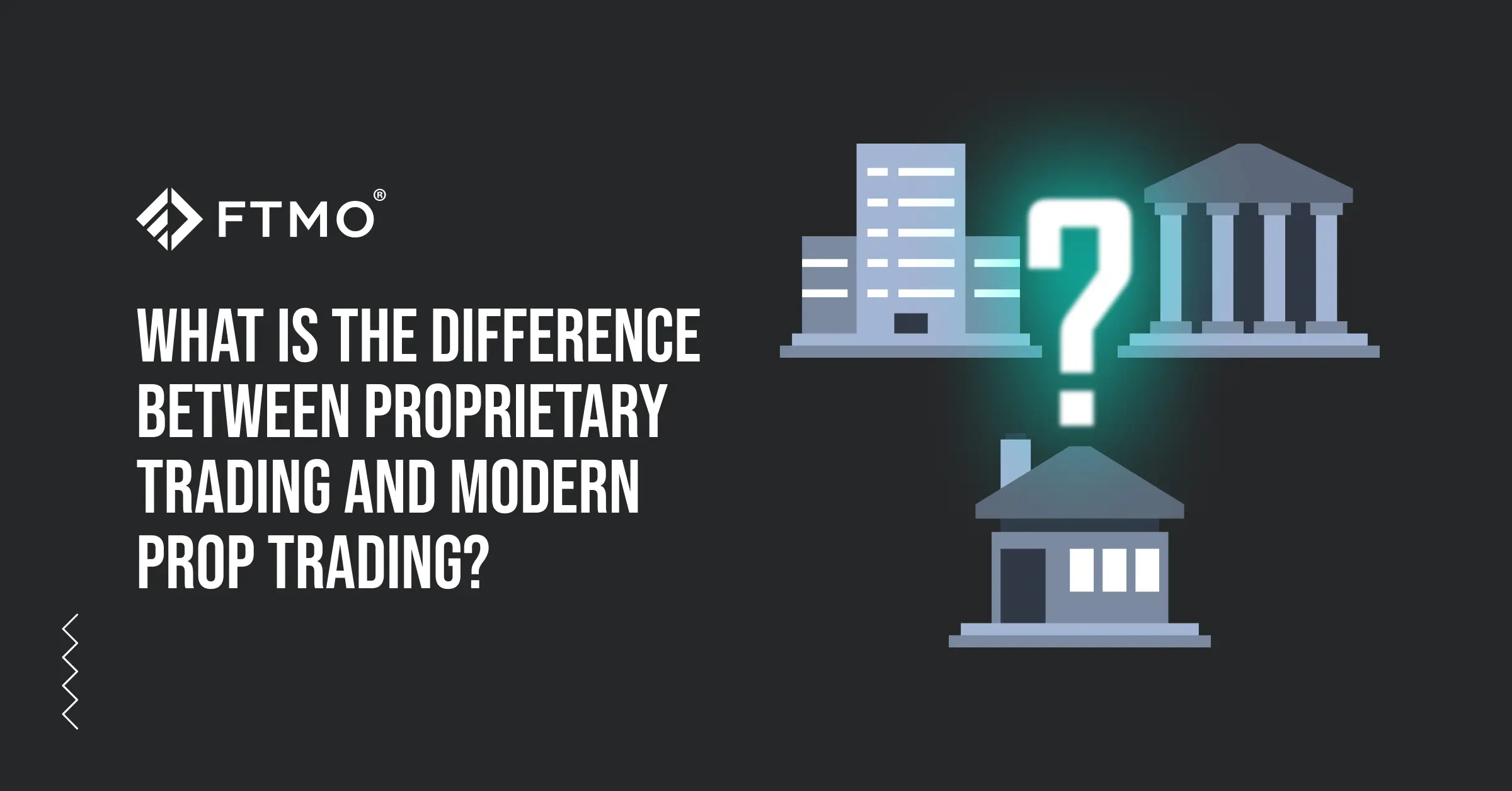
The term proprietary trading has historically been used to refer to the practice of a bank or other financial institution investing on its own behalf, using its own funds. Modern prop trading has redefined how traders engage with the markets by emphasizing flexibility, performance-based evaluation, and rewards. FTMO has been among the pioneers shaping this innovative approach.
Traditional Proprietary Trading vs. Modern Prop Trading
We use Modern Prop Trading primarily to refer to the different relationship between a trader and the firm they trade with.
Traditional Proprietary Trading involves allocating real capital to a trader who is physically present at the firm’s workplace. This trader is well known to the firm, which provides not only the necessary know-how and tools but also a regular salary.
With Modern Prop Trading, traders can tailor aspects such as their working hours, location, or trading method to suit their preferences. To access capital, traders must first pass a paid exam and adhere to certain rules. The capital provided by the modern prop firm is 100% simulated, and traders are rewarded for supplying the firm with data about their trading performance. This provides greater independence, but it also requires a well-defined trading plan.
Tempting Offer
Proprietary trading is an attractive opportunity for traders who want to operate in the financial market and do not have access to substantial capital. The prospect of a big company, the ability to trade with large amounts of money, and access to tools and information that the average trader cannot normally obtain are appealing to many potential traders. However, because it is a highly competitive and profit-driven environment, it is challenging to secure a job at a proprietary trading firm. Firms have relatively high expectations of their potential candidates.

The Demands Are High
Investment companies that use proprietary trading methods will not and cannot provide trading capital to just anyone. Since the financial market is regulated, institutions often have very strict requirements for employees who execute trades on their behalf. Such employees often have to pass tests to obtain certain certifications, must possess higher education, or undertake psychology testing. Without fulfilling these requirements—which are not easy to pass and may even cost a considerable amount of money—a potential trader cannot practice as a trader in a proprietary trading firm.
In addition, applicants for a trader position must have a certain history or should be able to demonstrate a track record of trading. In the financial market, profits come first, and it is generally difficult to find your way in if you do not have trading experience. If a trader can demonstrate a long enough history of good trading results, they may be of interest to a trading firm. Proprietary trading roles often require a strong grasp of financial markets, mathematics, statistics, and related disciplines—many of which may not seem directly tied to trading at first glance.
Modern Prop Trading
An interesting alternative to classic proprietary trading is Modern Prop Trading, including FTMO. Through simulated trading, traders gain the opportunity to determine whether they have what it takes to become a real trader, without some of the restrictions mentioned above. Moreover, they can practice their strategies and become eligible for financial rewards as well.
Modern prop firms are companies whose goal is to find aspiring traders and provide them with the tools, education, and the environment to experiment with their trading abilities.
For this purpose, modern prop firms have each developed their own way to objectively identify and educate potential traders from among those interested in trading, without the risk of significant financial loss on the part of clients. During this course, clients get access to online training programs, analytical applications, and an online platform that allows simulated trading in various financial instruments. This helps prop firms identify clients with the best potential for trading in real markets.
All information provided herein is intended solely for educational purposes related to trading on financial markets and does not constitute investment advice or serve in any way as a specific investment recommendation. Please read the full disclosure here.










- As many Free Trials as you need
- Up to a simulated $200,000 FTMO Rewards Account
- Performance-based rewards




Worldwide Reviews